Tired of looking like a static electricity experiment every time you take off your scarf? That cozy winter hat is secretly creating friction and static that snaps your strands. This simple, expert-vetted winter hair care routine for beginners guarantees smooth, hydrated hair all season. It focuses on moisture retention and breakage prevention.
In This Article
📈Key Trends
- The ‘Skinification’ of Hair: Consumers are prioritizing scalp health and barrier function, treating hair like skin with ingredients like Hyaluronic Acid and Squalane.
- Silk-Lining as a Non-Negotiable: The functional shift from cotton to silk/satin for sleep accessories and hat linings to mitigate friction and static damage.
🛒What to Buy
- Hydrating, Sulfate-Free Shampoo – Cleanses without stripping natural sebum, maintaining the scalp’s moisture barrier. (Suits: All hair types, especially color-treated or naturally dry hair)
- Intensive Deep Conditioner/Mask – Contains smaller molecules and higher concentrations of emollients to penetrate the hair shaft for deep, lasting repair. (Suits: Hair prone to breakage, high-porosity hair, and all hair types for weekly maintenance)
- Lightweight Sealing Oil (Argan or Jojoba) – Creates a protective barrier to lock in the moisture from your leave-in conditioner before the air can strip it. (Suits: Fine to medium hair (Argan), or those with a dry/imbalanced scalp (Jojoba))
🧢How to Wear It
- The Low-Friction Braid: Wear hair in a loose, low braid under coats and scarves to minimize friction-induced breakage and tangles.
- The Silk Scarf Shield: Wrap a silk or satin scarf around your neck and tuck your hair into it before putting on a wool coat or hat to create a friction barrier.
- The Blowout Temperature Check: Use your blow dryer’s cool-shot button at the end of styling to seal the cuticle and reduce the likelihood of static charge buildup.
The Winter Hair Survival Blueprint
The most effective winter hair care routine for beginners is a 7-step strategy centered on moisture retention. First, swap harsh cleansers for hydrating formulas. Incorporate a weekly deep conditioning mask. Seal strands with a protective oil. Minimize heat styling. Introduce silk or satin fabrics to reduce mechanical friction. These steps directly counteract the low-humidity, high-friction environment of the colder months, preventing static, frizz, and breakage.
The Environmental Science of Winter Hair Damage
The shift from summer humidity to winter dryness creates a perfect storm for hair damage. Cold air holds significantly less moisture than warm air. When you step outside, the low ambient humidity draws essential moisture directly out of your hair shaft, a process known as desorption. Inside, forced-air heating systems exacerbate the problem by creating an even drier environment.
This dehydration causes the hair’s outer layer, the cuticle, to lift and separate, making the strand brittle and porous. This dry state is the primary cause of two major winter woes:
- Breakage: Brittle, dehydrated hair snaps easily when stressed (e.g., brushing or detangling).
- Static: Friction from wool scarves, hats, and synthetic sweaters causes an imbalance of electrons on the dry hair surface. Because there is no moisture in the air to neutralize this charge, the strands repel each other, leading to those frustrating flyaways.
The 7-Step Moisture-First Protocol
For those new to specialized care, this protocol is not about adding complexity, but about strategic swaps that maximize hydration and minimize friction.
Step 1: The Cleansing Swap (Hydration First)

Ditch the harsh detergents. Traditional shampoos containing sulfates are highly effective at stripping dirt but also remove the natural sebum that serves as your hair’s protective moisture barrier. Switch to a sulfate-free, moisturizing shampoo to gently cleanse while preserving natural oils. In winter, you should also adjust your wash frequency; try stretching it to every three days or longer to let your natural oils work their magic. Always rinse with lukewarm water, as hot water further strips moisture and elevates the cuticle.
Step 2: Deep Conditioning is Non-Negotiable

A daily rinse-out conditioner simply coats the hair’s surface for detangling and smoothing. A deep conditioner, or hair mask, is a treatment: it contains a higher concentration of emollients and smaller, penetrating molecules that travel deep into the hair shaft to repair damage and restore elasticity from the inside out. Commit to using a deep conditioning mask once per week, applying it from the mid-shaft to the ends and leaving it on for 10-15 minutes.
Step 3: Sealing the Deal (The Power of Protective Oils)

Think of your hair oil as a winter coat. After applying a leave-in conditioner to damp hair, use a sealing oil to lock that moisture in before it evaporates into the dry air. Lightweight options like Argan oil add shine and smoothness without greasiness, while Jojoba oil closely mimics the scalp’s natural sebum, making it excellent for balancing scalp dryness. A few drops smoothed over your ends is all you need.
Step 4: Heat Protection Protocol & Lowering Temps

Heat styling adds yet another layer of stress to already brittle winter hair. Never, under any circumstances, use a heat tool—including a blow dryer—without a quality heat protectant spray. This product creates a necessary barrier. Furthermore, lower the temperature settings on your flat iron or curling wand to the lowest effective setting. If your tool has a temperature dial, aim for below 300°F (150°C) for fine or damaged hair.
Step 5: Overnight Defense (Silk vs. Cotton)

Your cotton pillowcase is a moisture vampire and a friction generator. Cotton’s fibrous texture creates mechanical stress and absorbs your hair’s natural oils and product treatments. Switching to a silk or satin pillowcase reduces friction by up to 51% compared to cotton, allowing your hair to glide freely and preserving both moisture and your style. Alternatively, use a loose silk bonnet or braid your hair before bed.
Step 6: Static & Frizz Emergency Kit

Static from hats and scarves is inevitable. For a quick fix on the go, a dryer sheet contains anti-static ingredients that neutralize the electrical charge—simply run one lightly over the affected area. If you lack a dryer sheet, rub a tiny, pea-sized amount of hand lotion between your palms and lightly smooth it over the static-prone flyaways to add a burst of neutralizing moisture.
Step 7: The Hydration Habit (Internal and Environmental)

Hydration is holistic. While topical products are crucial, supporting your hair’s health from the inside out with consistent water intake is foundational. Environmentally, a humidifier in your bedroom—especially if you run forced-air heating—is a simple, powerful tool. By increasing the indoor air’s relative humidity to the ideal range of 40–60%, you prevent the air from pulling moisture from your hair and scalp while you sleep.
Separating Fact from Friction
Myth: Static hair means your hair is healthy.
Fact: Static hair is a direct indicator of moisture deficiency. Dry hair is lightweight and has a greater tendency to hold an electric charge. Well-hydrated hair, with its natural oils intact, is heavier and less susceptible to the electron imbalance that causes strands to repel each other. Taming static is about adding hydration, not just using a smoothing serum.
Myth: You can only get split ends from heat styling.
Fact: While heat is a major factor, winter is a prime season for mechanical damage. The friction from rough fabrics like cotton, wool, and synthetic scarves when they rub against your hair can physically fray the hair cuticle, leading to split ends and breakage, even if you never pick up a curling iron. This is why protective styling and silk fabrics are so critical.
Elevating Your Winter Hair Strategy
Beyond the foundational steps, consider these advanced moves to truly elite-level winter hair health.
The Pre-Shampoo Treatment (Pre-Poo)
For those with very dry or curly textures, a ‘pre-poo’ treatment—applying a penetrating oil like coconut or olive oil to dry hair for 30 minutes before shampooing—can significantly reduce the moisture-stripping effects of the cleansing process.
Scalp Care as a Preventative Measure
The cold, dry air often leads to a dry, flaky, and itchy scalp. This is not always dandruff. Look for scalp serums or treatments containing ingredients like Jojoba or Hyaluronic Acid to balance the scalp’s microbiome and maintain a healthy environment for hair growth. A healthy scalp is the foundation for resilient hair.
The Leave-In Conditioner Layer
A leave-in conditioner is the essential link between your washing and sealing steps. It provides the initial, water-based hydration that your sealing oil (Step 3) locks in, preventing your hair from becoming overly dry between washes. It’s a non-negotiable step for anyone serious about winter moisture retention.
EDITOR’S INSIGHT: The Molecular Difference
A deep conditioner is chemically engineered to penetrate the hair shaft, not just sit on the surface. Look for ingredients like hydrolyzed proteins (smaller molecules) and rich, occlusive butters. If a product only needs 60 seconds to work, it’s a quick rinse-out, not a true deep treatment. Give your weekly mask the full 10-15 minutes it demands to truly rebuild compromised protein structure and enhance elasticity.
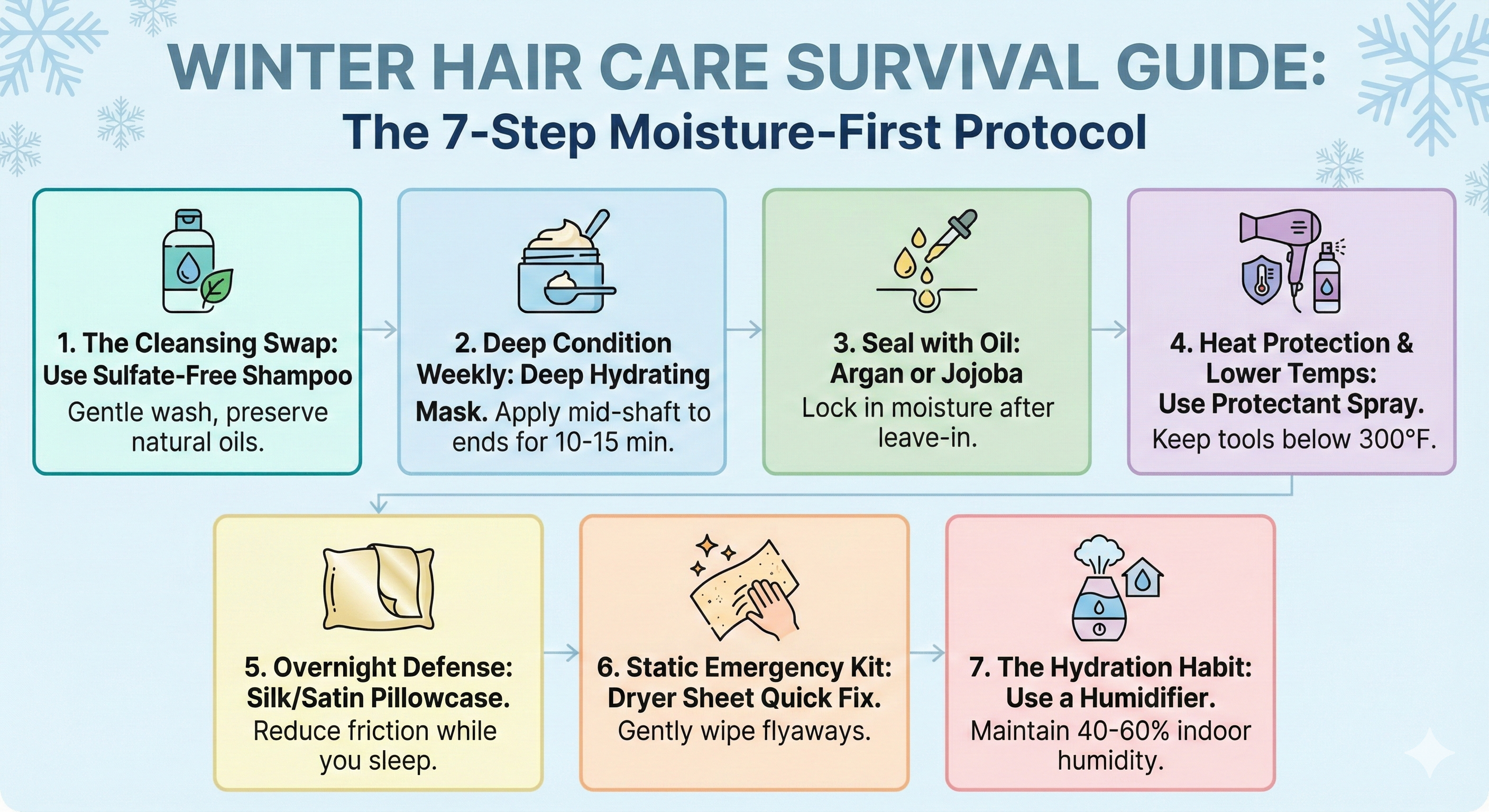
Winter Hair Care Infographic
This seven steps of winter hair care infographic is your handy guide. You can download it here for reference and use whenever you need it.

Discover more from Dailyinfotainment
Subscribe to get the latest posts sent to your email.